




SAN FRANCISCO – As urban traffic gets more miserable, entrepreneurs are looking to a future in which commuters hop into “air taxis” that whisk them over clogged roads.
Companies such as Archer, Joby and Wisk are working on electric-powered aircraft that take off and land vertically like helicopters then propel forward like planes.
“‘The Jetsons’ is definitely a reference that people make a lot when trying to contextualize what we are doing,” Archer Vice President Louise Bristow told Agence France-Presse (AFP), referring to a 1960s animated comedy about a family living in a high-tech future.
“The easiest way to think about it is a flying car, but that’s not what we’re doing.”
What Archer envisions is an age of aerial ride-sharing, an “Uber or Lyft of the skies,” Bristow said.
Neighborhood parking garage rooftops or shopping mall lots could serve as departure or arrival pads for electric vertical take-off and landing (eVTOL) aircraft.
Commuters would make it the rest of the way however they wish, even synching trips with car ride-share services such as Uber, which owns a stake in Santa Cruz, California-based Joby.
Joby executives said on a recent earnings call that its first production model aircraft should be in the skies later this year.
That comes despite a Joby prototype crashing early this year while being tested at speeds and altitudes far greater than it would have to handle as part of an air taxi fleet.
Joby has declined to discuss details of the remotely piloted aircraft’s crash, which occurred in an uninhabited area, saying it is waiting for US aviation regulators to finish an investigation.
“We were at the end of the flight test expansion campaign at test points well above what we expect to see in normal operations,” Joby executive chairman Paul Sciarra told analysts.
“I’m really excited about where we are right now; we have demonstrated the full performance of our aircraft.”
Its eVTOL aircraft have a maximum range of 150 miles (241 kilometers), a top speed of 200 miles per hour and a “low noise profile” to avoid an annoying din, the company said.
Joby has announced partnerships with SK Telecom and the TMAP mobility platform in South Korea to provide emissions-free aerial ridesharing.

“By cooperating with Joby, TMAP will become a platform operator that can offer a seamless transportation service between the ground and the sky,” TMAP chief executive Lee Jong Ho said in a release.
Joby has also announced a partnership with Japanese airline ANA to launch air taxi service in Japan.
And Toyota has additionally joined the alliance, with an aim to explore adding ground transportation to such a service there, Joby said.
Rethinking required
Hurdles on the path include establishing infrastructure and adapting attitudes to make air taxis a part of everyday life.
“For mass adoption, people need to have a mindset change,” Bristow said.
“Getting people to want to travel in a different way will take some rethinking.”
The need for the change, though, is clear, she reasoned.
Roads are congested with traffic that wastes time, frays nerves and spews pollution.
“There is nowhere else for traffic to go,” Bristow said.
“You have to go up.”
Miami and Los Angeles are already exploring the potential of aerial ridesharing, and Archer is hoping to have a small air taxi service operating in at least one of those cities by the end of 2024.
“It’s a monumental task that we’re taking on,” Bristow said.
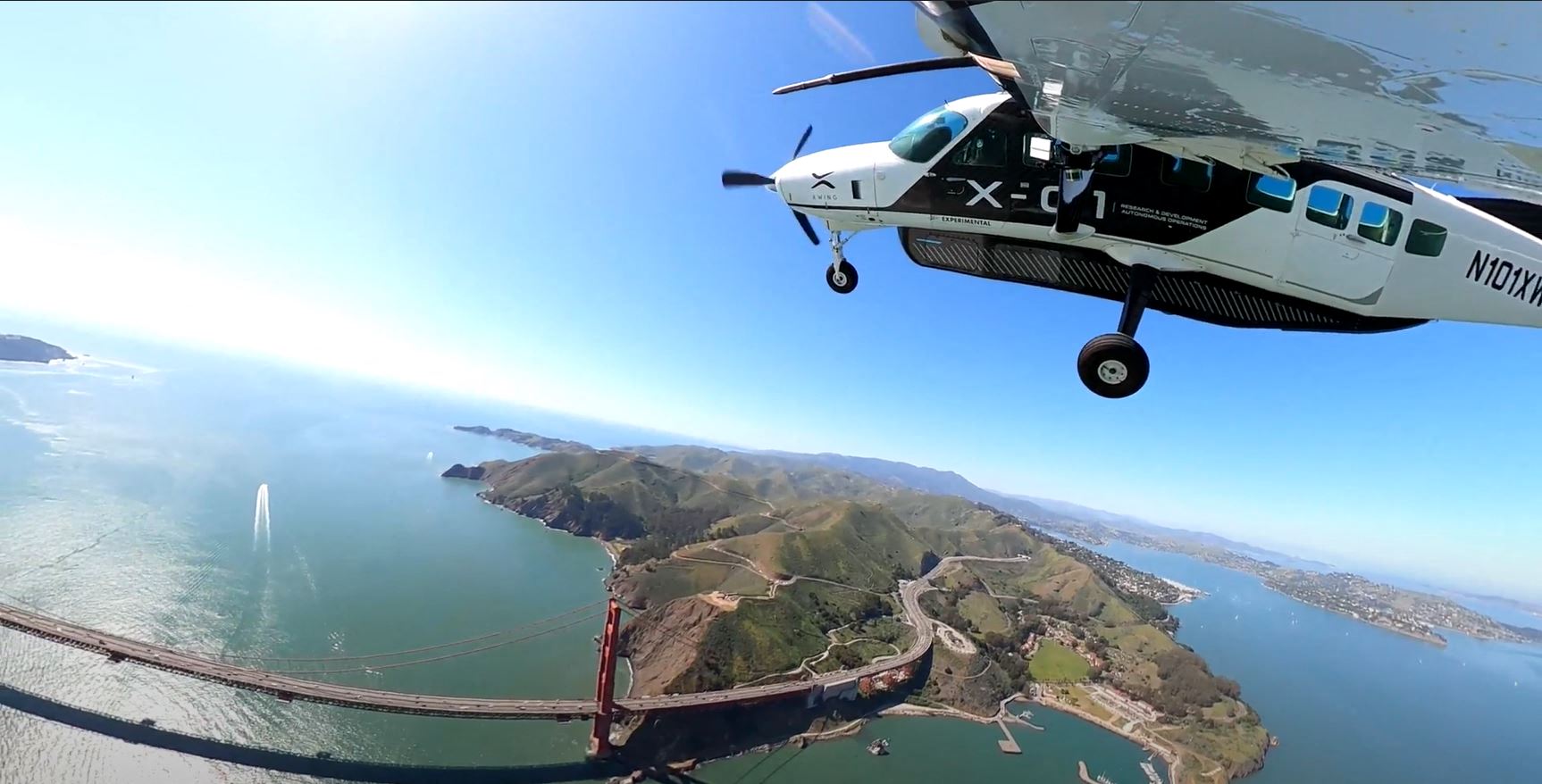
MAIN PHOTO: A Cessna 208B which has been outfitted with autonomous flying equipment flies over the Golden Gate Bridge in San Francisco/ AFP photo